
goings on: summer madness
The New Yorker caves; Zohran and Cuomo's housing "plans"; Booker and soft secession

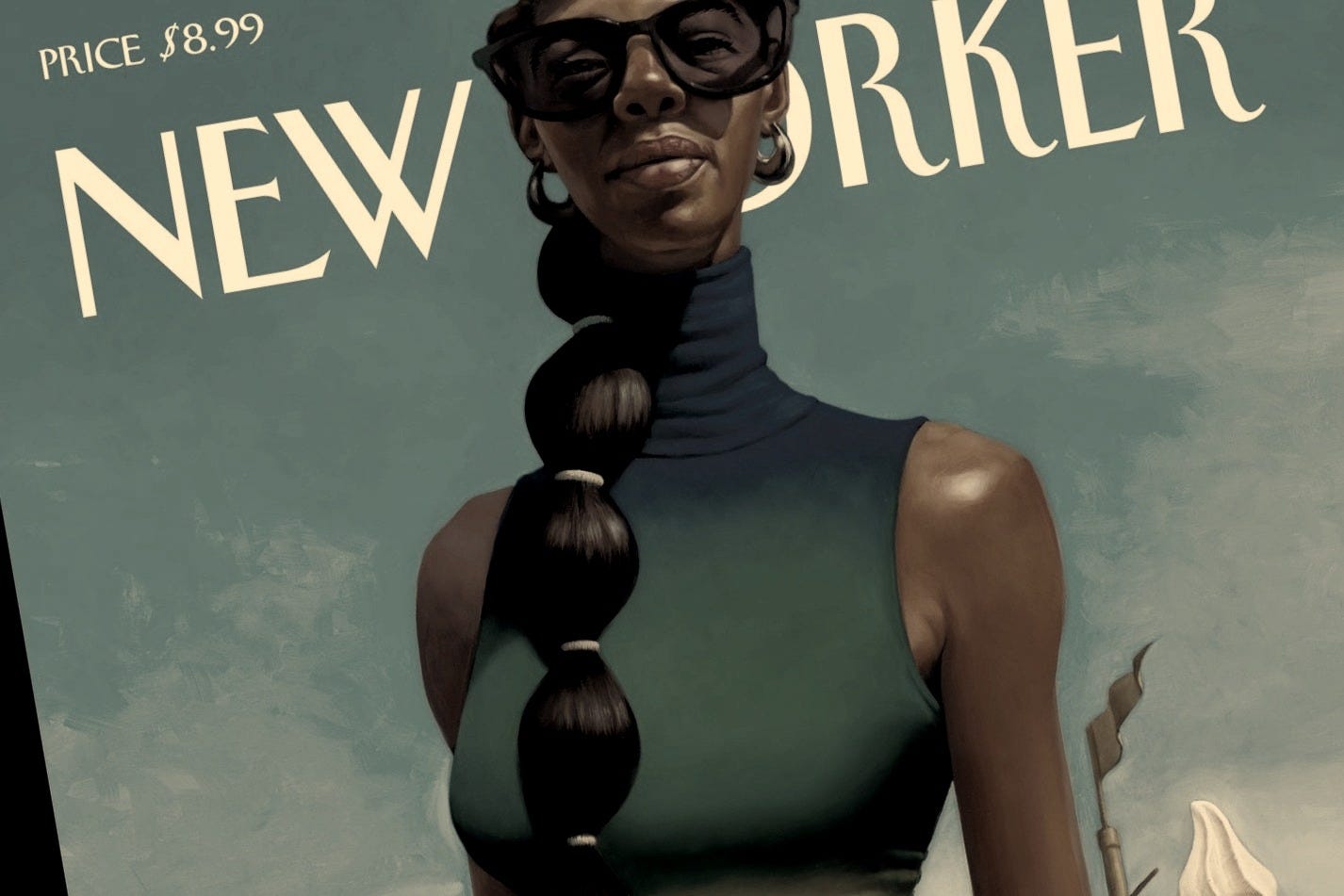
Last week The New Yorker found itself in a conflagration of its own making, provoking right-wing furor in response to a short essay about an American Eagle campaign starring Sydney Sweeney. The ads, which proclaim SYDNEY SWEENEY HAS GREAT JEANS in all-caps block-letter font, require little interpretation; the essay, written by staffer Doreen St. Félix, is an exercise in cool restraint. “The allusion is incoherent, unless, of course, we root around for other meanings, and we don’t have to search for long,” St. Félix writes. “Genes, referring to Sweeney’s famously large breasts; genes, referring to her whiteness.” The ads are shameless beyond belief, and St. Félix, to her credit, is bored by them.
Nevertheless, Manhattan Institute fellow Chris Rufo — last seen purging Florida’s university libraries — called foul, dredging up decade-old tweets to accuse St. Félix of “anti-white racism.” The tweets are medium-spicy at best, mostly referencing personal interactions, but the response was swift; St. Félix deleted her account on August 14th. The Daily Mail and New York Post echoed the “anti-white” horn, and hundreds called for St. Félix’s head on Twitter. When she wasn’t immediately and publicly fired, it was proof The New Yorker was shielding her, further evidence of bias.
On the contrary — St. Félix is being hung out to dry. No one at Condé Nast has made any statement acknowledging attacks against her; in assigning a piece about the American Eagle campaign, The New Yorker acceded to its terms. Sweeney was a c-list television actress until she became a Republican folk hero. American Eagle knew bog-tier edgelord shit would prompt measured takedowns from the liberal press, which would incite people like Rufo and drive publicity. There’s a murderers’ row of bad actors, and The New Yorker played into their hands. Whether implicitly or explicitly, St. Félix has been punished.
There are shades of Jemele Hill and Jazmine Hughes, character assassination that will never be retracted.1 “Despite her disdain for capitalism, St Felix appears to benefit from its fruits,” the Post sneered. “Her address listed as a $1.3 million home in a gated Brooklyn community which faces a pretty marina.” (sic, I can think of like eight housing projects that fit that description.) It’s plausible some Condé ombudsman named Henry reads St. Félix’s tweets and concludes she’s Doreen Farrakhan. But I expect she’ll be fine, to the extent any marginalized employee is fine working in a public-facing capacity at an institution like The New Yorker. The greater threat is Rufo’s reframing, that Condé’s Black workers ought be held to the same standards and social media policies as their white colleagues, as if one is not a persecuted minority.
In the face of right-wing attacks, The New Yorker assumes a position of spinelessness and powerlessness; each exacerbates the other. St. Félix has a five-figure salary, no leverage, no book deal, no job waiting for her elsewhere. In 2020 fellow New Yorker staffer Jia Tolentino was chased off the internet by fans of the Red Scare podcast, who accused her parents of human trafficking. Tolentino denied the accusations, and hasn’t published anything of consequence since. It’s possible she chose a quiet life of maternal bliss, but either way, The New Yorker couldn’t or wouldn’t protect its biggest star from racist trolls. Tolentino is cheugy, she’s basic, fine. The alternative is Katy Waldman writing 4,800 words about some streaming TV show without submitting a single idea of her own.
Rufo is right about one thing. St. Félix’s left-wing politics, her experience and identity, are chief qualifications for the job. Granted, she had to thread a few needles: David Remnick isn’t handing out gigs to SUNY grads. But The New Yorker could not meet the moment, as it were, without a writer of St. Félix’s caliber. (I’m reminded of the gag about how the Democratic party wants a candidate who looks like Zohran Mamdani with the politics of Chuck Schumer. Doesn’t work that way!) She’s one of the best working essayists, and she’s an Afro-Caribbean woman from outer Brooklyn; the latter reinforces the former. The masthead decided years ago her perspectives were critical to the magazine’s ongoing mission. Why bother if you’re going to cave to Chris Rufo?
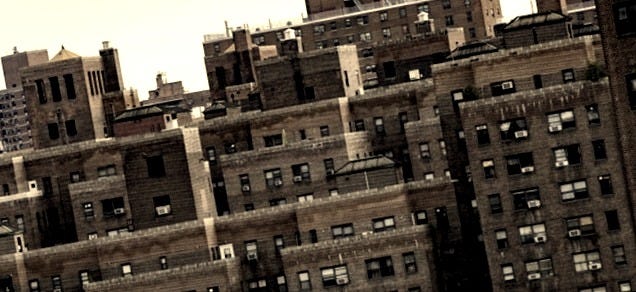
After getting throttled in the primary, Andrew Cuomo decided the best way to discredit Zohran Mamdani was to paint him as a gentrifier exploiting New York’s lenient rent-stabilization policies. Citing Mamdani’s current residence — a $2,300-per-month, rent-controlled one-bedroom in Astoria — Cuomo’s introduced a proposal called “Zohran’s Law,” which would mandate eviction of rent-stabilized tenants who aren’t actively rent-burdened.
The proposal is a flailing, cynical disaster, pleasing few and mobilizing fewer. The gag is, Cuomo — who has not lived in New York City for some three-and-a-half decades — rented an $8,200-a-month apartment to meet residency requirements for the mayoral race. That’s the market! He’s living proof of the city’s exclusivity. Unfortunately, goombah has a point: rent stabilization in New York is a joke. Only a quarter of units are stabilized, and they’re rarely listed on the open market, an effective lottery. Rent stabilization is neither means- nor income-tested, irrespective of population and market trends. Zohran is a well-connected guy with a six-figure salary who, thanks to a vestigial loophole, rents an apartment hundreds of dollars below market.
I can’t overstate how consolidated the supply of stabilized units is, and how hard it is to land one. Because a tiny, finite number of apartments are stabilized — and market-rate units lease, on average, at $4,100 a month — tenants stay in stabilized units until they die, then pass them on by means legal or otherwise. It is a club, the beneficiaries exempt from market pressures in the world’s most expensive city. The greatest determinant of quality-of-life in New York is an utter crapshoot.
The broader crisis is a combination of unchecked markets and policy abandonment. New York City’s population has doubled since 1910, but the supply of co-ops, rent-controlled apartments, and public housing hasn’t budged in decades. A chosen few are grandfathered into WWII-era housing programs, while the rest of us pay an arm and a leg. The waitlist for NYCHA is a decade long, but if you’re born in the Alfred E. Smith Houses you get to live in the Lower East Side for $399 a month.
Folks are understandably bashing Cuomo’s proposal, and letting Zohran off the hook. “Rent control is not a subsidy,” economist and tenant advocate Alexander Ferrer posted on Twitter. “It is not a benefits program. Rent control is a negotiation of the social limits of rent. It’s about how much we are willing to allow to be picked from all of our pockets.” I’m sorry, what else would you call it? The only way to negotiate rent — let alone rent control — is electing politicians to do it for us. The core of Zohran’s affordability plan is a rent freeze for rent-stabilized tenants, the people least in need of assistance. Oh no, you’re telling me a unit that hasn’t listed since 1962 might see a rent hike of $18? While the rent on my studio walkup goes up $500 every year? The extent of the crisis has been wildly misrepresented by uncurious reporting on the most comfortable New Yorkers.

Zohran has focused on stabilized tenants because they’re reliable voters; he doesn’t need to worry about the twentysomething with seven roommates in Crown Heights because she’s either (a) already in his corner or (b) not registered at a stable address. Cuomo is campaigning in bad faith, but this is how elections are supposed to work — he got pummeled in the primary, and now he’s making overtures to the left. Hopefully Zohran responds with better policy! This race could be an opportunity to address a crisis instead of pandering and pretending it’s fine.
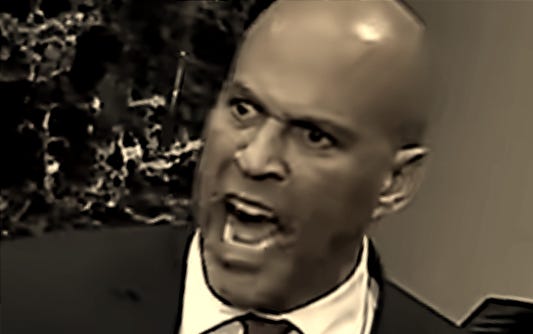

Armitage casts the federalists as a liberal shadow-government, staging resistance via early-morning Zoom calls and encrypted groupchats. But these are Democrats we’re talking about — as ever, the cure for Too Many Cops is More Cops. Late last month, Cory Booker took an impassioned stand against federal budget cuts on the Senate floor.
“I’m standing for Jersey! I’m standing for my police officers, I’m standing for the Constitution, and I’m standing for what’s right,” he began. “There’s too much on the line right now in America — people’s due process rights, people’s free speech rights. Secret police are running around this country, picking people up off the streets who have a legal right to be here. There’s too much going on in this country! When are we going to stand together?”
Typically, Booker’s rant was empty political theater, staged for cameras rather than a legislative session. Most fascinatingly, he seems to believe funding for local precincts would help them fight ICE deportations. Why would they do that? What’s the constituency for this? This is where the Democratic platform graduates from harebrained hypotheticals to full-on conspiracies.
Say you live in Cresskill, New Jersey, which has 22 police officers on payroll. They write traffic tickets and respond to domestic disputes. Lieutenant Shanahan, six months from pensioned retirement, has creaky knees and a bad back. Now imagine ICE shows up in Cresskill and starts picking day laborers off the street. Do you suppose the Cresskill P.D. will be organized, or deputized, or incentivized, or in any way qualified to combat ICE? Are they going to form a human blockade on Grant Avenue? Is Lieutenant Shanahan going to draw his Glock on federal agents?
Obviously not — cops are cops, and until a week ago their job was to enforce federal immigration law. Okay, what if we hire more of them? Or pay them more? Wouldn’t that change things? Again, no, because you’re expecting autonomous police departments to transform into a coordinated Resistance Militia Network overnight. It’s fantasy, the Spider-Man pointing meme come to life.
President Trump is siccing the National Guard on American cities as we speak. You can’t expect armed paramilitaries to uphold your legislative agenda, much less when the laws themselves are subject to a competing agenda. As Armitage points out: “Daily the courts are showing that something is legal when Trump wants it to happen, and illegal when he doesn’t.” Why would police unions pick up the slack? It’s not secession if you’re outsourcing the dirty work.
previously: zohranblog: home stretch | is our children learning? | The Friend From The Television | Consumer culture is the only culture
I do think the Hughes episode was an industry-wide warning, echoed in this instance by The New Yorker; all Hughes did was point out Times editors were putting their colleagues at risk. Are you a newspaper and a workplace, or a leaflet for domestic terrorism?