
Volcanic winter
Malcolm Lowry's opus; Mexico City moodboard

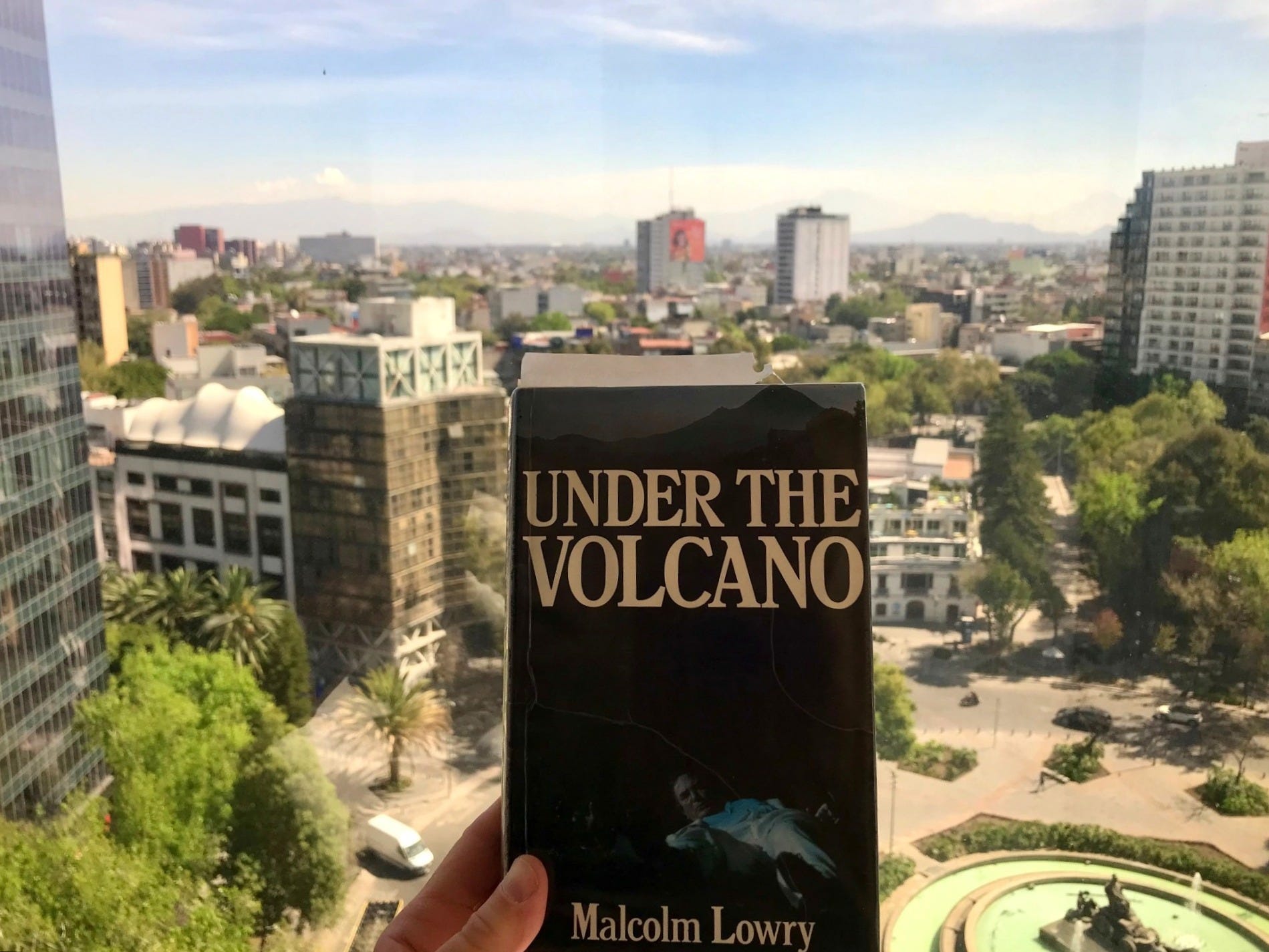
Under the Volcano
Malcolm Lowry
Jonathan Cape, 1947
It was mid-November, I’d just had COVID for the third time in 26 months, despite the masking and the work-from-home and the general deprivation of earthly pleasure. My s/o had been laid off from her remote job, the election had gone badly, worse than anticipated. Things were, at risk of indulging self-pity, Not Going Our Way, so we strapped on our ventilators and hopped a flight to Mexico City.
What’s another cliché, at this point? I cracked Under the Volcano shortly after takeoff; I’d purchased an old British edition at the Blackstone Library sale. There was a useless foreword by some no-name academic, giving the entire game away. I was forty pages into the text when we touched down, by which point I’d decided it was the greatest novel I’d yet encountered. I found wifi and fired sweaty iMessages back to New York and L.A. it’s like if fante wrote the lost weekend. but like, in mexico.
Under the Volcano endures thanks to the Modern Library, which ranked it #11 on a 1998 list of 100 Best Novels. It’s an outlier among household names, books taught in schools — a greater distinction given Under the Volcano’s checkered publication history. (Lowry’s name appears before Hemingway’s, Orwell’s, and Woolf’s.) Judging from the internet, it’s one of those novels overbearing men discuss in hallowed tones; if such men exist, I haven’t met any.
The first chapter makes a case. Under the Volcano is an expat novel, a tale of exile and displacement. A contingent of continental bachelors lazes about beautiful Quauhnahuac, staring into liquor glasses. Laruelle, an English-speaking Frenchman, plays tennis with the village doctor and takes the scenic route home. It is Dia de los Muertos, and the villagers trace a somber, candlelit parade down the mountain. The sweeping descriptions of Quahnahuac’s natural beauty, the ruined architecture and steadfast natives, frame Laruelle’s own anguish and resolve.
The device is a stunning misdirection. The peripheral narration, the melancholy, the stilted interactions with townsfolk — the subtle framing gives way to a day-in-the-life of Geoffrey Firmin, a British consul drinking himself to death. We’re treated to the Consul’s every utterance and apprehension, his alcoholic swoons, blackouts conveyed in hazy time-lapse. Laruelle disappears, returning now and again as a hacky foil, what if the Consul had his shit together.
The pace slows to crawl, and it just kind of goes on for another 400 pages. The narrative teems with mythological allegory, the drama and pathos of life, but also it’s just a guy who can’t stop drinking mezcal. Dialogue whips back and forth in no less than four languages; I had to look up multiple references on each page, which made uninterrupted reading impossible. The Consul grieves his parents, he makes up little songs, he sits on the toilet for fifteen pages and then does it again. I thought I was reading The Lost Weekend, when it was really Ulysses.
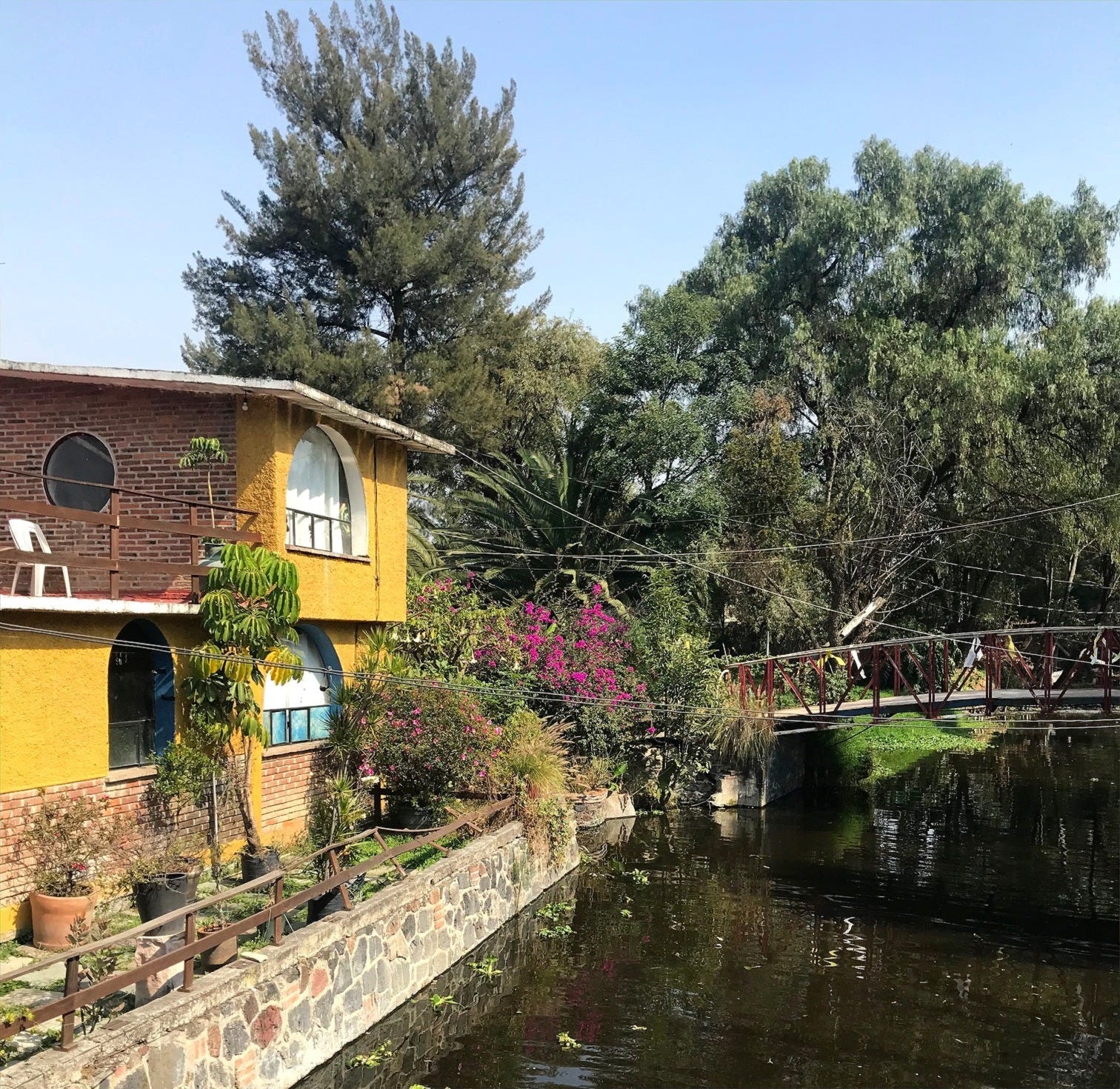
We took an Uber to Xochimilco and spent Saturday afternoon on a trajinera boat we’d booked on Airbnb Experiences. Our teenaged guides — Diego aka “Taco” and Jose aka “Josexy” — circulated Carta Blancas and lotería cards among the passengers. The winner of each round was marched to the front of the boat for a scorpion shot. My high-school Spanish was neither as bad as I expected, nor as good as I pretended.
Sitting up that night, restless from jetlag and reposado, I watched lightning beyond the mountains and thumbed a Blake Nelson post that had pinged my inbox. Down in Oaxaca, Nelson had happened upon a community of aging American hippies bemoaning the election result at a local library. ”It was mostly an older expat crowd,” Nelson reported. “The men in Panama hats, knee braces, trim white beards. The women in shorts, close-cropped hair, orthopedic hiking sandals.” No judgment — things had happened to them, or else they’d done it to themselves.

Then again, a little self-awareness never hurt. If Mexico — our southern neighbor and, for many purposes, our polar opposite — is a refuge for disaffected American liberals, it says more about us than it does about Mexico. Had I, like Nelson’s gringos, washed up in CDMX to lick my wounds? Having grown up in Literally Connecticut? Sure, wheels had been greased. There was the exchange rate, the skyscrapers bearing Verizon and PwC logos, the late-night dive in Roma Norte where everyone wore Yankees gear. Escape to where? From what?
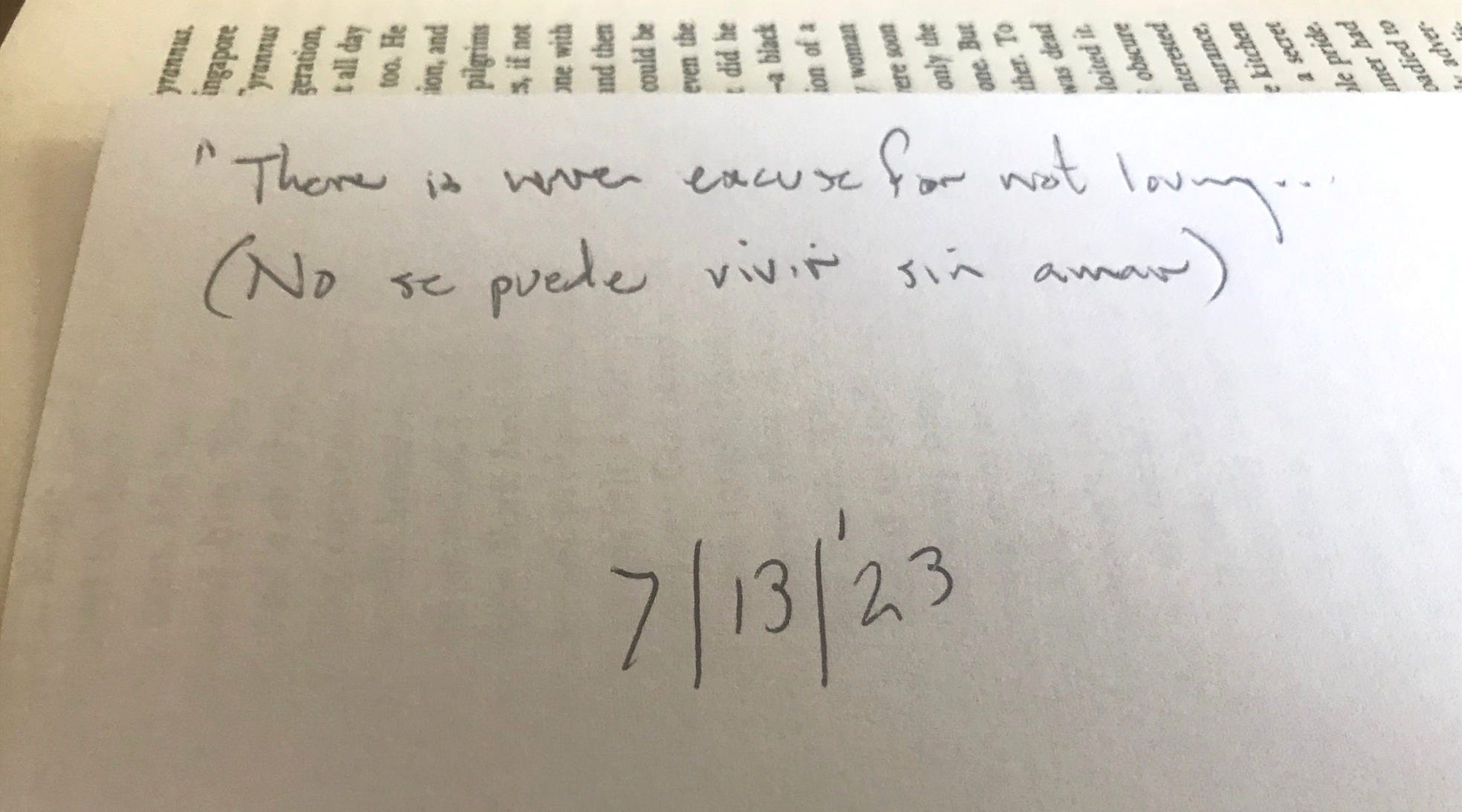
Under the Volcano is mostly about the mail. The Consul’s wife Yvonne, who’d accompanied him to Mexico years earlier, returns to Europe and files for divorce on account of the whole liter-of-mezcal-a-day thing. The Consul writes drunken, lovelorn letters — they read like term papers — but is too afraid to send them. Then Yvonne changes her mind, and sends a dozen letters declaring her love, detailing plans to attempt reconciliation in Quahnahuac. But the letters are never delivered (Laruelle somehow winds up with them after the Consul’s death, classic), so when Yvonne shows up the Consul doesn’t know what’s going on, and lacks the nerve or lucidity to ask.
That’s the gist; they wander around for another 300 pages, looking and talking past each other. The Consul and Yvonne barely converse, but Lowry does this thing where they glance at each other and he transcribes what the glances mean, what they would say if they could find words. It’s not one of those David Foster Wallace parables about the inadequacy of language, because Under the Volcano is nothing but language. Yvonne — it is heavily implied1 — has slept with Laruelle, as well as the Consul’s younger brother Hugh (who also shows up after years on a cargo ship, don’t ask).
So Yvonne is like, this long-suffering Cassandra seeking the comfort of hollow caresses, but she’s also this irresistible siren who’s driven the Consul to madness. (She’s also, it emerges, a former Hollywood starlet, because why not.) Regardless, there’s little friction here — she speaks in gee-whiz exclamations and suffers few misgivings. The Quahnahuac neighbors receive her as an immaculate, redeeming angel, even though she’s already slept with half of them. She’d be pitiful if she weren’t such a moron.
Yvonne is an inscrutable savior straight out of The Sun Also Rises or Tender Is the Night or For Whom the Bell Tolls, one of those inert, saintly heroines without motive. Men idolize her, fight over her, but never consider her. Inadvertently or not, Lowry glimpses the Western Mind: Yvonne, like the toothless barkeeps and pelados, is a means to an end. When people are subjugated beyond hope, what’s left but for them to exonerate you? The big reveal, in Chapter IX, is that Yvonne has daddy issues; the misogyny, at least, is ahead of its time.
Laruelle, it turns out, is an estranged childhood friend of the Consul — they passed an adolescent summer together in Normandy, qualifying Laruelle to assess the Consul’s declining state. So Laruelle arrives in this tiny Mexican hamlet, sight unseen, reasons unknown. He rents a little house with a waterfall, and what do you know! His old buddy the Consul lives next door. And they’re basically like, what’s up, man, and they go about their respective business until Laruelle sleeps with the Consul’s wife and the Consul stumbles off a cliff. The coincidences pile up, everything divinely ordained, everyone doomed by Quahnahuac’s infernal post office.
Lowry’s Mexico is the end of the earth, more escape — into the mountains or a bottle — than destination. The drinking culture is integral, but it’s not exactly a social lubricant. “In the final analysis there was no one you could trust to drink with you to the bottom of the bowl,” the Consul remarks in one of his reveries. “A lonely thought.” The Consul, Yvonne, Laruelle, and Hugh are utterly, critically alone, even when they cross oceans to hang out.
But here’s the thing — Lowry’s characters choose the rootless expat life, and make it everyone else’s problem. They tend gaudy little gardens, stagger around the village, harassing shopkeeps, leaving shitty tips. “This is how I sometimes think of myself, as a great explorer who has discovered some extraordinary land from which he can never return to give his knowledge to the world,” the Consul declaims in another of his disquisitions, “but the name of this land is hell.” Send a postcard.
previously: Pretend it’s a city | Canal Street confidential | Infinite playlist | Public intellectual
Speaking of heavy implications and The Lost Weekend — in the foreword of my edition (online here), Stephen Spender states very confidently that the Consul is a repressed homosexual:
For those who seek it out, the clinical history of the Consul’s longing for companionship, fear of sex, deeply idealistic puritanism, rejection of the world, and suppressed homosexual tendency, is embedded in the narrative.
Perhaps it went over my head (I tap out when the dialogue veers into German), but I can’t find a single reference in the text supporting this theory.
I finally read Under the Volcano this year after several false starts over the decades. Turned out to be very entertaining with a dark sense of humor. Robert Stone’s Children of Light would be a good companion piece; it’s just about as lurid a depiction of tropical dissipation among the ruins of an ancient land and gives a twist to the Consul’s romantic dynamic and hero’s journey to hell.
I think The Lost Weekend is more of an after-rehab book