
cooling off
local color

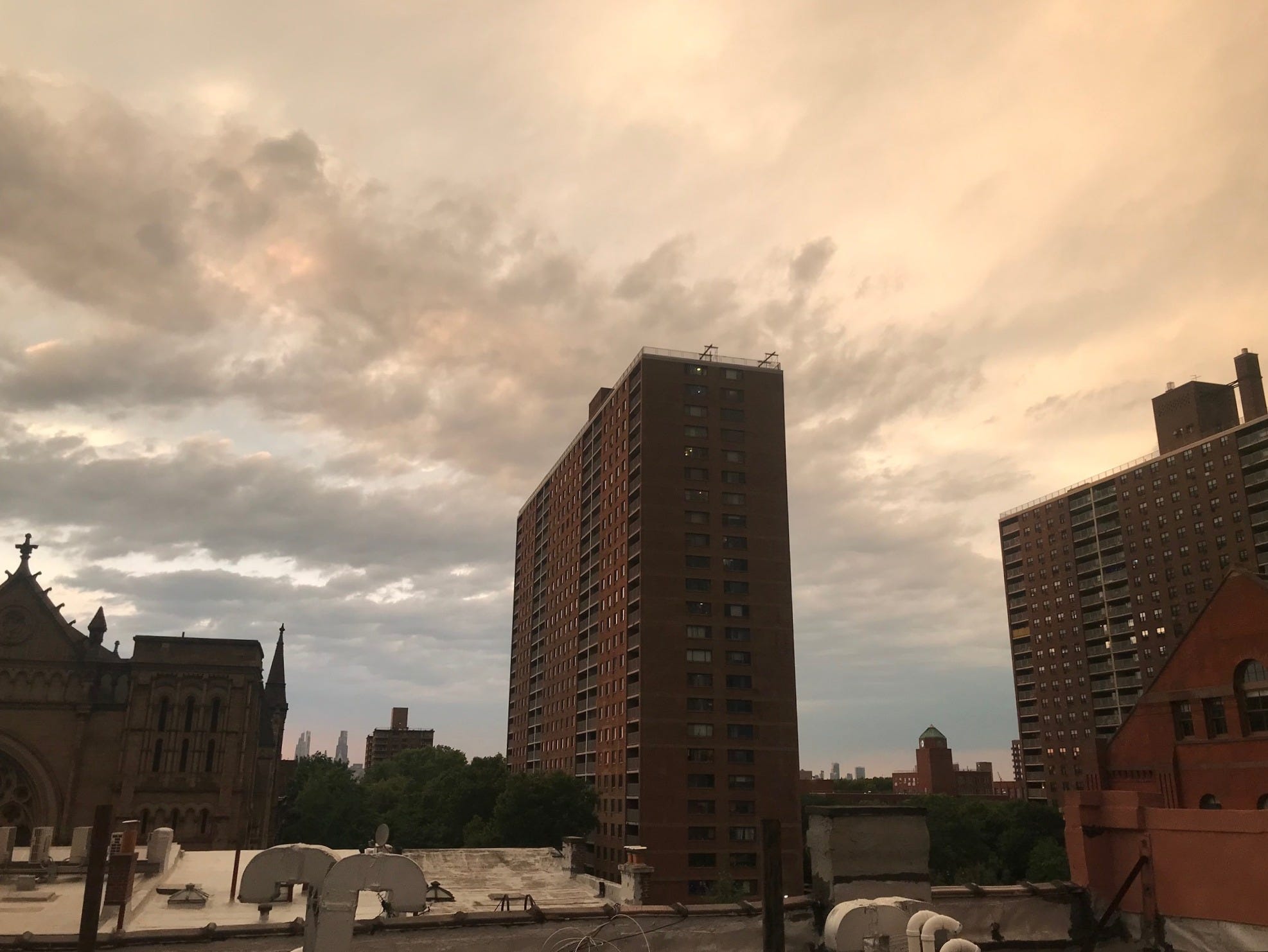
She woke up, he didn’t. It dawned on her gradually, then all at once. He’d been a fitful sleeper, lurching from his back onto his stomach, twisting the pilly weighted blanket around his narrow, corded torso. There was an urgency about his nocturnal movements, a charge she hadn’t glimpsed in daylight; she’d wondered if he suppressed it, if he even had to. He was not, in her experience, the sort to linger in bed. The other time she’d staggered into the kitchenette and found him hunched over his laptop screen, headphones over matted hair, coffee cooling on the laminate counter. Dust hovering in harsh sunbeams as she continued into the windowless bathroom. He’d nodded and resumed typing.
This morning he was contorted in a sort of half-stretch, one arm behind his head at an uncomfortable looking angle. Mouth cranked open, chest still. Then there was the smell. She nudged him, dressed quickly, yanked her phone from the outlet behind the scarred nightstand. 911, she reasoned, was for people with a chance. They’d kick in the door and point guns at the first thing that moved — which, by process of elimination, would be her. She tapped the touchscreen until she found another number to call.
She was outside when they arrived, inhaling cool air in gulps, and followed the platoon upstairs. She’d locked the apartment when she left, but they managed to get in without her assistance. Nice, she thought. Once the EMTs had made off with the body, the remaining men set about taking photos, marking surfaces, picking items off shelves and putting them back. They barked into walkie-talkies and mumbled amongst themselves. A uniformed cop asked her to confirm details, barely looking up from his notebook. He rolled his eyes when she couldn’t tell him the last name of the deceased; she pointed to a stack of mail on an endtable.
Cops drifted out of the apartment and were replaced by new arrivals. She sat on the futon but felt conspicuous, in the way, a nuisance. She approached a man in shirtsleeves and told him she’d wait out in front of the building. He said fine, don’t wander off, we’ve got your info and may need you for further questioning. She’d helped herself to a glass of orange juice from the fridge, which he seemed to find suspicious.
Your body, she figured, could steel itself. The little hairs in your nose would be activated, standing at attention like hackles on a dog’s back. Neural pathways could be disabled, reflexes sharpened by necessity. People who dealt in flesh and blood and bodies built up defenses, but the stench would consume her memory. It would not complicate his sweetness or vindicate his meanness. He’d been perfectly unremarkable, had not risen to any occasion; she’d found her way into his home when she might’ve done anything or been anywhere else. If this made her unremarkable by association, perhaps there was time to do something about that.
✧ ✧ ✧
Carla picked up on the third ring and agreed to cover her shift.
“Is everything okay?” Carla asked.
“I’m fine,” she replied. “It’s this…guy I’d been seeing. I think he died last night.”
“Kevin died?” Carla gasped into the phone. “Oh hon, I’m so sorry. Let me know anything I can —”
“Not Kevin,” she said.
“You mean,” Carla tried again, lowering her voice. “The guy from the gallery?”
“Not him,” she said. She wheeled around and stared up at the building’s facade. Someone in the apartment, thank God, had propped open the fourth-floor window with a hardback book.
“Oh,” Carla said, out of guesses. “Well, I’m scheduled for the late shift. Do you think we could trade, in that case?”
When she’d hung up and returned the phone to her pocket, she sat down on the concrete step facing the street. She didn’t really know the neighborhood, but she knew ones like it. Neighbors had emerged in robes and slippers, heaving themselves into vehicles parked on the curb. The night before he’d mentioned something about street sweeping, that he was supposed to move his car in the morning.
She heard the vestibule door swing shut behind her. The cop who’d questioned her squinted into the sunlight and joined her on the stoop. It was six months and seventeen days since her last cigarette, but she thought it wise to pull one from the pack he pushed toward her. She asked if there was any news.
“EMS will take him to the ER,” he said, exhaling smoke through his broad nose. “They’ll try to revive him, run some tests. But yeah, that guy’s gone. Sorry.”
He was a younger cop, combat tats exposed below the precinct patch on his sleeve, GARCIA embossed on the horizontal bar below his badge. He fiddled with a rubber ring on his left hand, one of those tactical wedding bands men wore to signal they could still shoot guns and pitch tents. In a procedural, she considered, it would make him sympathetic. He’d done whatever he’d done over there, then came back to do whatever he did over here — working a beat, operating machinery, growing bald and paunchy. She constructed the counternarrative. He read websites cataloguing all the things men couldn’t do anymore. He bet money on sports teams he didn’t care about. He said terrible things to women in his life, or at least behind their backs. He pulled a tax-funded salary and smoked shitty cigarettes on the clock.
“No signs of foul play,” he continued, turning toward her. “We’ll need your statement, so if you can’t stick around, we may call you into the precinct later on. But I can’t make you do anything.”
A second group of cops had arrived in slightly different uniforms. She recognized them as traffic enforcement officers, dispatched for the weekly street sweeping. As kids they’d known these were unarmed cops, the ones you could fuck with; she hadn’t contemplated or cared that they were always South Asian men. They shuffled down the block, standing before the cars that hadn’t been moved across the street, punching plate numbers into handheld devices. She pointed to a gray Toyota parked on the far corner.
“That’s his car,” she told Garcia. “He was going to move it. It’ll get towed.”
“I wouldn’t worry about it,” Garcia said, stubbing his cigarette between his boots. “People die in their sleep, more than you’d think. Every death is technically a heart attack, but that doesn’t mean it’s the cause of death. When they say natural causes — what they mean is shitty diets, shitty lifestyles, diseases that eat you from the inside. Or, you know, drugs.”
She said she didn’t think he was into that stuff.
“But you don’t know for sure, do you?” he said. He hoisted himself upright and went back into the building.
✧ ✧ ✧
She called the landline in her father’s apartment and sighed in relief when Irina picked up. She could hear Irina puttering around the cramped kitchen, opening and closing cabinets, corraling dishes into the shallow sink. A foreign voice droned, faintly, in the background, a news or talk broadcast from halfway around the world.
“Irina, thank God,” she said. “I’m so glad I caught you. How is he?”
“He is out of bed, dressed, eating his breakfast,” Irina said over the running faucet. “He has taken his pills. Cable man is coming later today. Have to go soon.”
“Thank God. Thank you. Irina, I’m so sorry to ask. I had to take a later shift this evening. Is there any chance you could come back around…eight? His dinner’s in the refrigerator, his nighttime medication’s in a separate pill planner behind the bathroom mirror. I can be back before midnight, if you could just get him into bed…”
“I cannot come at eight,” Irina said.
“Oh, I —”
“I will send my cousin,” Irina said. “He will charge higher rate. Between you and him.”
“Your cousin,” she said, balancing the books in her head. “Okay. Can you leave a note with the blood pressure monitor? So he knows about the intervals? And let him know my father startles easily, so not to speak too loudly or slam any doors? Has your cousin dealt with other folks who —”
“He will be sleeping in bed when you get back,” Irina said, accent asserting itself as she grew annoyed. “Same as any other night. Have to go now.”
There was nothing else, no best- or worst-case scenario. She thanked Irina again, heard the dial tone, lowered her phone and opened the weather app. It was barely 9:30 and her stomach growled. She heard another siren wailing in the distance.
✧ ✧ ✧
The morning had burned a hole in her pocket, and now it stretched before her. She imagined languid weekdays in a quiet neighborhood, bakeries and newspapers and chestnut-colored dogs shitting in flowerbeds. The train back to her apartment would be 45 minutes if she nailed the transfers.
She would start with coffee, an expensive cup with notes of this or that. She unlocked the vestibule door and hiked to the fourth floor. The men in the apartment were chatty, at ease, leafing through stacks of forms on clipboards. She approached Garcia, lingering by the window, and told him she was going for coffee; he nodded vacantly and returned to his phone screen. A bowl of keys, matchbooks, and chewing gum sat on a low table by the door. No one was watching her. She extracted the Toyota key and slipped it into her left pocket.
Out on the street the traffic cops were moving south, nearing the building. The gray sedan was the last car on the opposite curb, but an empty space beckoned across from it. She approached the driver’s side door and sunk the key into the cylinder. She adjusted the seatback and keyed the ignition. The stereo blared as the car roared to life, an abrasive dance-rock act he’d mentioned in passing; he’d been survived by his taste in music. The quarter-tank of gas would rip a hole in the stratosphere that outlasted them all. She shifted the car into gear and steered it across the street.
I enjoyed reading this! Nice job.